

You want a home that feels warm and unique without harming the planet. Enter 2026's sustainable home wave: recycled wood lamps casting golden glows, cork furniture that's soft underfoot, and garden hacks turning scraps into thriving plots. These trends blend beauty, durability, and zero-waste ethos, slashing your carbon footprint while boosting style.
This guide dives into recycled wood lighting, cork's rise, and clever garden tricks. Expect DIYs, product picks, and tips to make your space planet-friendly without breaking the bank.
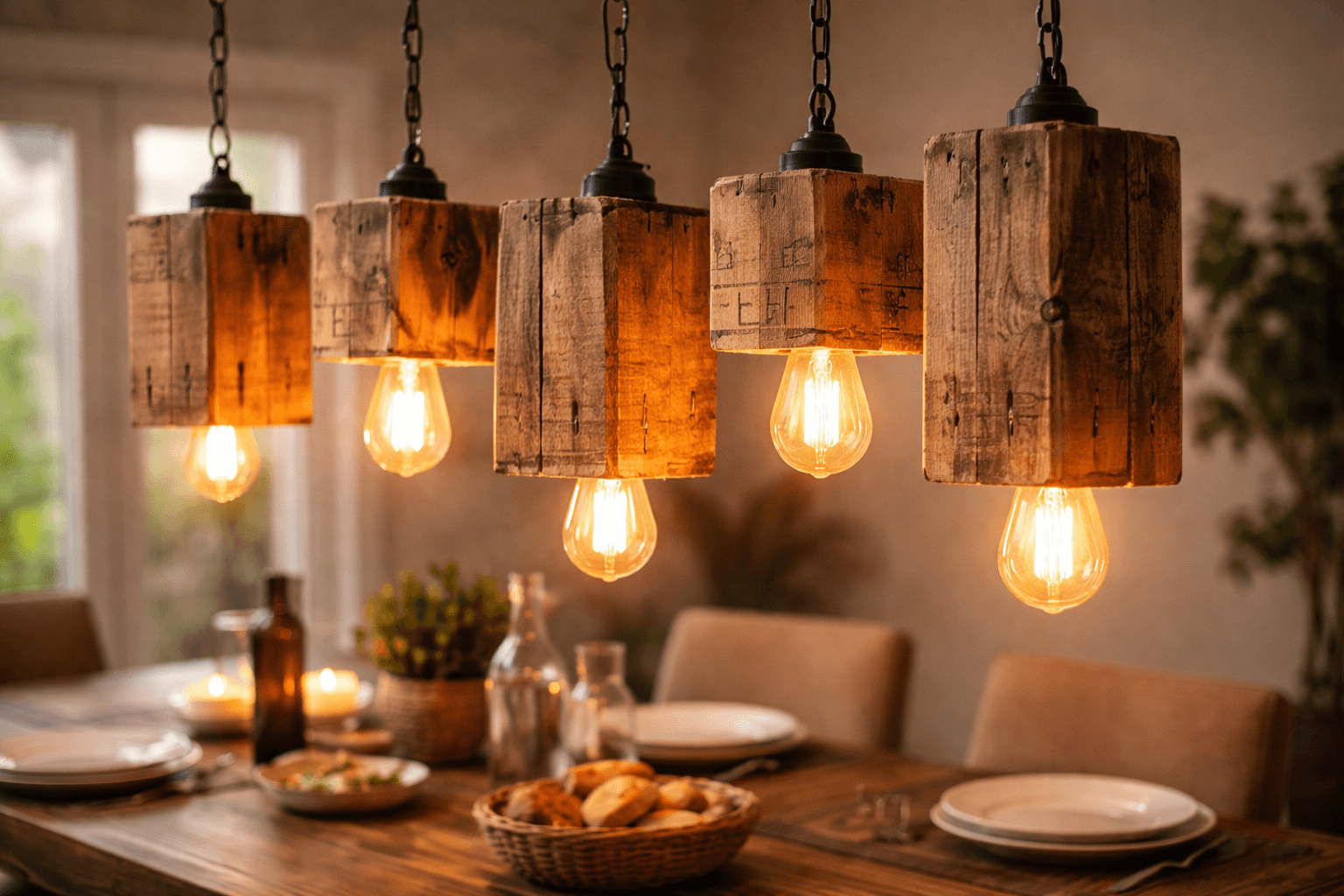
Recycled Wood Lamps: Rustic Glow With A Green Story
Wood scraps from construction sites or fallen branches find new life as statement lamps. 2026 forecasts show 40 percent growth in upcycled lighting searches, driven by biophilic design craving natural textures.
Why they shine: Reclaimed wood (oak, walnut, reclaimed pallets) absorbs imperfections into character. Handcrafted pieces average $150-400, versus $800 for new designer lamps. Each lamp diverts 5-20 pounds of waste from landfills.
DIY Hack: Source free pallets via Craigslist. Sand smooth, drill for wiring (kits $20 on Amazon), add Edison bulbs. Seal with beeswax for durability. Pro tip: Mix woods for ombre effects.
Featured picks:
- West Elm Reclaimed Wood Floor Lamp ($299): Adjustable arm, 10-year warranty.
- Etsy Artisan Pallet Pendant ($89): Custom heights, ships free.
These lamps warm minimalist spaces, their grains telling stories of old barns or urban salvage.
Cork Furniture: The Soft, Sustainable Revolution
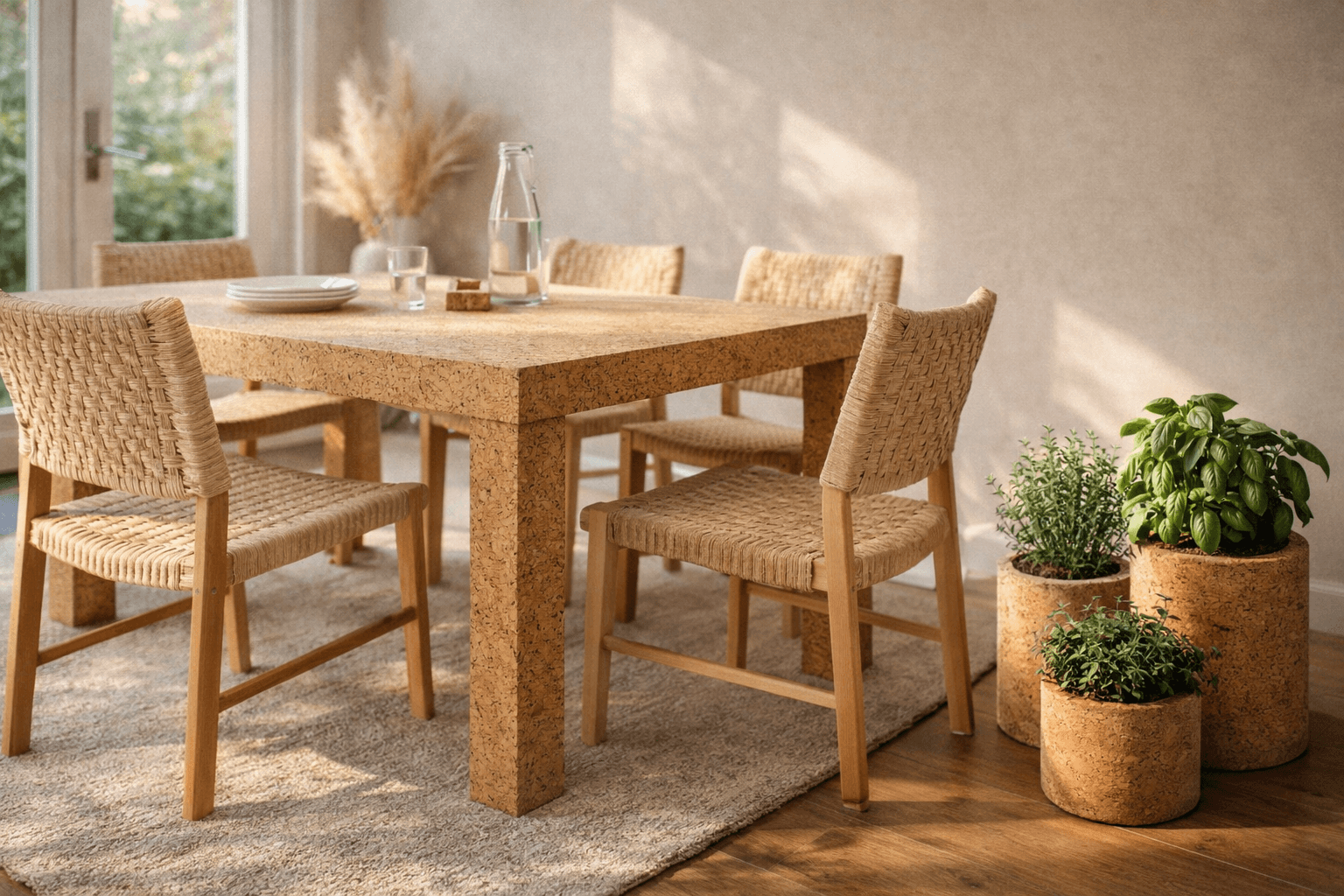
Cork, harvested renewably from Portuguese oaks (no tree killed), surges as 2026's it-material. Lightweight (half oak's weight), waterproof, antimicrobial, and insulating, it suits floors, walls, tables, even upholstery.
Standout uses:
- Cork flooring: $5-10/sq ft, softer than wood, muffles sound 40 percent better. Expands/contracts minimally.
- Cork tables/chairs: Woven or block styles from brands like Wuyong ($400-800). Self-healing scratches.
- Wall panels: Acoustic, thermal insulation; peel-and-stick options for renters.
Zero-waste bonus: Cork bark regenerates in 9-12 years. Global production hits 350,000 tons yearly, mostly Portugal.
DIY: Glue cork sheets ($15/roll) over old tabletops. Sand edges, oil for shine. Instant $200 upgrade.
Cork's earthy taupe pairs with terracotta pots, creating hygge havens that breathe.
Zero-Waste Garden Hacks: Scraps To Harvest
Turn kitchen waste into gardens, slashing food miles and bills. 2026 sees "closed-loop" gardens trending, where scraps feed soil that feeds you.
Top hacks:
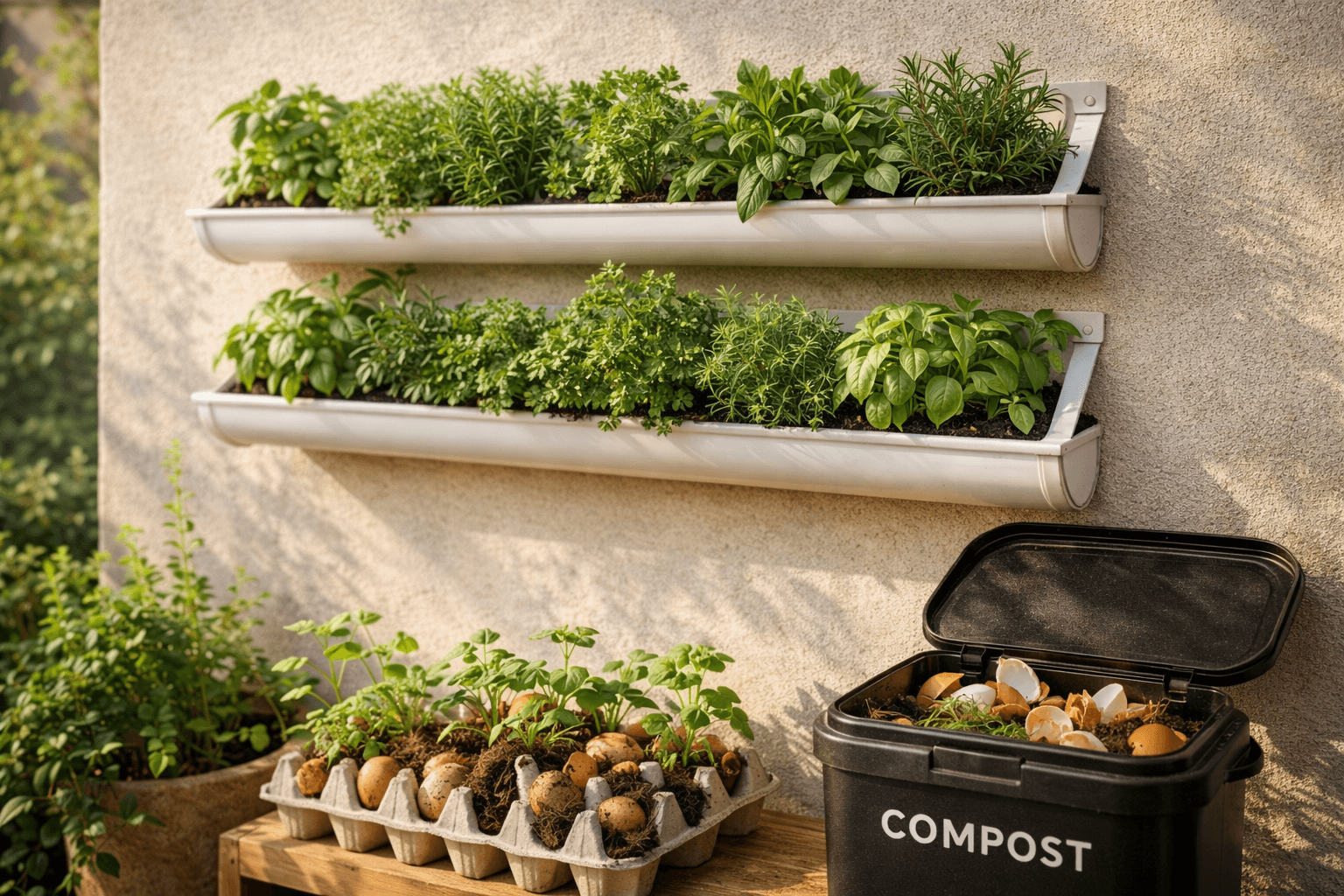
- Scrap pots: Hollow coconut shells or toilet paper rolls for seedlings. Line with coffee grounds for drainage/nutrients.
- Compost tea: Blend veggie peels, water, strain. Fertilizes weekly, zero odor in sealed jugs.
- Vertical scrap planters: Old gutters ($5 at scrap yards) for herbs on walls. Saves 70 percent space.
- Seed balls: Mix clay, compost, seeds; toss in pots. Guerrilla gardening for balconies.
Yields: Regrow scallions/celery infinitely; potato peels sprout in months. Cost: $0 beyond time.
Pro setup: Worm bins ($40) process scraps into vermicompost, harvesting 1 pound weekly for 4x yields.
These hacks make gardening accessible, turning "waste" into abundance.
Blending Trends: Your Sustainable Home Blueprint
Layer for impact:
- Entry: Cork console with recycled wood lamp.
- Living: Cork rug under thrifted wood coffee table.
- Kitchen: Scrap-herb windowsill garden.
- Budget total: $800-1,500 for full refresh.
Benefits: 30 percent lower energy bills (cork insulation), zero landfill contributions, timeless appeal over fast trends.
Common pitfalls: Skip unsealed cork (stains easily). Test wood for chemicals pre-DIY.
Sustainable home 2026 is practical poetry: materials with history, hacks with harvest. Start small. Your space (and planet) thanks you.
FAQs
What makes recycled wood lamps a sustainable choice for 2026?
They repurpose construction scraps, pallets, or fallen branches, diverting 5-20 pounds of waste per lamp from landfills. Handcrafted from reclaimed oak/walnut, they last decades with natural durability. 2026 forecasts 40 percent search growth due to biophilic appeal. Cost $150-400 vs. $800 new; seal with beeswax for longevity. Source via Craigslist for free materials.
Why is cork the hottest sustainable furniture material in 2026?
Renewably harvested from cork oaks (no trees felled, regenerates in 9-12 years), cork is lightweight (half oak's weight), waterproof, antimicrobial, and insulating. Use for floors ($5-10/sq ft, 40 percent better sound muffling), tables/chairs ($400-800), or walls. Self-heals scratches; global production 350,000 tons/year. DIY: Glue sheets over old surfaces for instant upgrade.
What are the best zero-waste garden hacks for beginners?
Scrap pots: Coconut shells/toilet rolls for seedlings, lined with coffee grounds. 2. Compost tea: Blend peels, strain for weekly fertilizer. 3. Vertical gutters: $5 scrap yards for wall herbs (70 percent space savings). 4. Seed balls: Clay+compost+seeds for easy sowing. Regrow scallions/celery free; worm bins yield 1 lb vermicompost/week.
How do I combine these trends for a full sustainable home refresh?
Budget blueprint ($800-1,500): Cork console + recycled wood lamp in entry; cork rug + wood table in living; scrap-herb garden in kitchen. Benefits: 30 percent energy savings (cork insulation), zero waste. Pitfalls: Seal cork/wood to avoid stains; test for chemicals. Start with one room for momentum.
Are these trends affordable and durable long-term?
Yes. Recycled lamps/DIY under $100; cork $5-10/sq ft lasts 25+ years. Hacks cost $0-40. All outperform fast furniture (IKEA lasts 5 years vs. cork's lifetime). ROI via lower bills (7,600 gallons water saved/year with smart hacks) and resale value.
